Showing posts with label Camera. Show all posts

Monday, April 13, 2009

Hear all about it!


Whether you are a pro or a newbie,
gear or Photoshop oriented,
there is a pod-cast tailored to you


You have an i-pod or an mp3 player, even most mobile phones have the ability so why aren't you listening to photography pod-casts? Don't know where to find them, Ok well here is a list to get you started.

From Cameratown.com

The Ultimate List of

Free Photography Podcasts

This list was compiled by Cameratown.com a photography news related website and is quite extensive although by no means complete.

If you know of any great photography pod-casts please post them in the comments section of this post!

If you share this link please let everyone know you found it here at: freephotostuff.blogspot.com

Thanks.

Sunday, February 8, 2009

In depth explorations of the latest canon cameras...


Canon White Papers:
Beyond the Manual

Canon's White Papers are not manuals. They are:

* A detailed, in-depth look at the major features within each specific camera

* An exploration of new system enhancements, with an explanation of the technology behind each one.

* A comprehensive overview of Canon software and accessories compatible with each model.

White Papers are traditionally created for product marketing -- but we also want to offer these informative documents to any photographer wanting to learn more.

All of the White Papers below are free to download, easy to read, and we hope they help Canon shooters take the fullest possible advantage of their cameras.

NEW! EOS 5D Mark II
Click here to download the EOS 5D Mark II White Paper (4.2 MB)

EOS 5D
Click here to download the EOS 5D White Paper (1.4 MB)

NEW! EOS 50D
Click here to download the EOS 50D White Paper (4.2 MB)


EOS-1Ds Mark III
Click here to download the EOS-1Ds Mark III White Paper (2.3 MB)

PDF IconAdobe Reader is required to view and print the White Papers. Click here to download Adobe Reader.


And remember...

Please share this link, and let everyone know you found it here at: freephotostuff.blogspot.com

Thanks.

Monday, October 13, 2008

Live-View and Movie-Mode with any SLR

DIY Canon 5D mkII


From Carlos aka- Miami Fever over on Flickr. Perhaps this is Canon Inc's inspiration for including video into their new 5DmkII. Even if it isn't the idea is genius. Now all of us SLR users can reap the benefit of the live view and movie modes available in nearly all of today's point and shoots.

From Miami Fever's Flickr photostream:

"I would find myself having to put down the 5D when I wanted to shoot a video, and vice-versa.
It's really nice to be able to shoot a video of some subjects whose motion and sounds (such as cars) add interest as you photograph them.
I don't do this for street shooting, since discretion is key, the 5D is big enough as it is, and video wouldn't really be as interesting as a still.
This should work with any camera with a hot-shoe and any point and shoot with movie mode and a standard 1/4" tripod mount."

Carlos gives the details of the hardware used in his custom mount over at flickr where he goes by Miami Fever. Pay him a visit and let him know how much you like his creation! You can also compliment him on his amazing street photography taken on the streets of Miami. Most of his great images are what can be described as available dark, capturing the vibrant night scene in Miami without the use of a flash. It doesn't hurt that his images often include many of the beautiful women seemingly roaming the streets of Miami. You can also check out Carlos's blog: http://www.miami-fever.com/ where he posts additional photos and information about his photo documentary of life in Miami.

Carlos is also adept at converting all manner of lenses for use on his Canon 5D. Check out his flickr "Gear" set to see many of his lens adaptations. Additionally Carlos runs a photography and gear oriented blog: Ask Carlos where he elaborates and answers questions about photo equipment, lens compatibility, and his overall shooting technique.

And remember...

Please share this link, and let everyone know you found it here at: freephotostuff.blogspot.com

Thanks.

Sunday, September 21, 2008

DIY 120 SPAMera®


SPAMera®, originally uploaded by [ CK ].

Now you can have your camera and eat it too!

From Chris Keeney's Flickr page...

SPAMera®

This is my newest camera in my collection. It takes 120 roll film and yields 8-12 exposures. Made in my kitchen on 02.03.06. ~ 220 film compatible

Hormel // SPAM Museum // SPAM Family // SPAM History // The Art of SPAMography

more information about this camera at chriskeeney.com

Uploaded by [ CK ] on 6 Feb 06, 1.59AM PDT.

And remember...

Please share this link, and let everyone know you found it here at: freephotostuff.blogspot.com

Thanks.

Wednesday, May 21, 2008

Free Classic Camera Auction Catalog & CD Rom...

Free Collection of Clasic Cameras on CD

WestLicht of Vienna, Austria, is a Camera Museum and Photo Gallery with revolving exhibits and a major Photographic Auction House. The cameras that are displayed in the museum and pass through the auction house are nothing short of beautiful, representing a full history of photographic cameras and equipment.

Prior to the each years auction WestLicht makes the auction catalog available for free. The collection can be viewed on-line of ordered on CD ROM with accompanying book. Visit the WestLicht website to view or order the current catalog: https://www.westlicht-auction.com/index.php?id=24750&_ssl=on

The WestLicht museum in Vienna, Austria is one of the worlds premier collections of photographic equipment. For those of us who love cameras it is a shrine to the past. Their collection is vast and extends from the orgins of photography until today. If you are passing through Vienna or Europe don't miss a chance to visit.

WestLicht
Westbahnstrasse 40
1070 Vienna, Austria
Tel: ++43 1 523 56 59 16


No I didn't have the winning bid....

Original Daguerreotype SOLD for $792,000

In 2007 A 1839 daguerreotype camera, ancestor of modern photography, was sold at WestLicht's auction in Vienna for nearly 600,000 euros making it the world's oldest and most expensive commercial photographic apparatus.

An anonymous buyer paid 588,613 euros (792,000 dollars), bidding by Internet, said the Westlicht auction house.


The first camera ever sold, 1839 "Daguerreotype" by the Paris manufacturer Susse Frères


Oldest & most expensive camera of all time.
Fetching near 600,000 euros at auction on May 26th 2007, a "Daguerreotype" by the Paris manufacturer Susse Frères. This very recently discovered camera throws new light on the history of photography: the attic find proved to be an example of a camera from September of 1839. up till now it had been thought to be a myth. In the meantime numerous experts attest it very likely might be the oldest commercially-produced camera in the world.

Louis-Jacques-Mandé Daguerre (18 November 1787 – 10 July 1851) was the French artist and chemist who is recognized for his invention of the daguerreotype process of photography.

The Daguerreotype was the first successful photographic process, the discovery being announced on 7 January 1839. The process consisted of:
- Exposing copper plates to iodine, the fumes forming light-sensitive silver iodide. The plate would have to be used within an hour.
- Exposing to light - between 10 and 20 minutes, depending upon the light available.
- Developing the plate over mercury heated to 75 degrees Centigrade. This caused the mercury to amalgamate with the silver.
- Fixing the image in a warm solution of common salt (later sodium sulphite was used.
- Rinsing the plate in hot distilled water.

A site dedicated exclusively to Daguerre is http://www.daguerre.org
Interestingly enough, there are enthusiasts who still produce dagerreotypes. See here.

The origins of commercial photography, previously no camera by this manufacturer was known to even exist!

Up till the present "The Daguerreotype" produced (also in 1839) by Daguerre’ s brother-in-law, Giroux had been regarded as the origins of commercial photography. There are around ten of these in existence in various large museums. But even earlier, on the 5th September 1839, a small Susse Frères advertisement appeared in the French newspaper “La Quotidienne” though except for a few instructions (e.g. in the George Eastman House in Rochester) no camera by this manufacturer was known to exist. This world sensation is now being exhibited in WestLicht, in Vienna, Austria. The camera with the original lens by Chevallier is in wonderful original condition and has never been restored or modified.

Wednesday, March 5, 2008

DIY Camera Lens


Teach an Old Camera
New Tricks!


(Photo: Zeiss Ikon on a Sony Alpha A100)


Make an old camera useful again. Many old film cameras and lenses can easily be adapted for use with todays Digital SLR's. The science for which cameras and lenses make good DSLR adaptations is simple. The lens needs to go from a thicker camera body to a thinner body (with the adapter thickness making up the difference).

If you transfer to a thicker body then the lens will only focus for a couple of feet like a macro lens and everything else beyond will be out of focus. An optical element (lens) can be fitted into an adapter to correct this but they 1.) are very hard to find 2.) are very expensive 3.) you lose some quality and perhaps 1 f-stop of speed.

Kimmo Kulovesi (who took the photo above) writes about his adaptation on Yahoo flickr:

Contessa Nettel Cocarette on the Sony DSLR A100

"A Contessa Nettel Cocarette camera attached to my Sony DSLR A100 by means of sticking an 11mm M42 extension tube to the rear port of the camera. The moving lens assembly allows infinity focus to be achieved, enabling the 105mm f/4.5 Carl Zeiss Tessar lens to be utilized with the DSLR. (Or indeed, almost any SLR capable of accepting M42 lenses either directly or with an adapter..."

"from 1923... it's about as sharp as any lens I have."

-Arkku from Flickr

Lens adaptations or hacks have been around for as long as there have been cameras. Since there has never been a agreed upon standard mount between manufactures there has always been the case of certain special lenses that photographers could not live without and were adapted over when the photographer changed or updated camera systems. Some lenses like the 1920's Kodak Pocket Folder lens have been considered so special for their soft focus portraiture that they have been sought out, and modified to work in modern portrait studios.

Loss of automation is something to consider if you do desire to do an adaptation. Today's DSLR wonder-cams have a lot of integration between the camera and the lens. Without a modern electronic lens attached you will lose some automation that we take for granted today. Some of the biggies include:

Autofocus

You will surely lose Autofocus and the ability of the camera to determine when the shot is in focus using the focusing points. You will have to twist the focus knob yourself and then eyeball the image in the viewfinder to determine if the focus is correct.

Creative Modes

You will be stuck using the camera set to manual "M" mode or (if you are lucky depending on the camera make) possibly Aperture priority, if your camera can still meter light properly without an electronic lens, (Sorry Nikon DSLR users you lose your lightmeter!)

Auto Diaphragm

Modern cameras allow you to meter and focus with the lens iris wide open, then as the shutter is pressed the lens automatically stops down to the preset opening just before the shutter fires. The reason for composing with the lens wide open is to give a brighter viewfinder and to ease in focusing. With an adapted lens you will need to set the lens iris manually before you press the shutter.

To the modern DSLR user the loss of automation alone can be daunting. For those of us that used film cameras it will be like stepping back in time. Either way it is surely more work to adapt and use a non system lens than to just buy one made for your camera. However for many of us Do-It-Yourselfers hours of enjoyment can be had by adapting and using these older lenses and cameras.

And remember...

Please share this link, and let everyone know you found it here at: freephotostuff.blogspot.com

Thanks.


Wednesday, January 30, 2008

Free Leica M Stuff

Free

Leica M

Screensaver & Guides


My current and favorite screensaver for several years has been the beautiful Leica M screensaver. Available from the Leica Camera Co's website it shows the development of the legendary Leica M camera from the original up to the M7, the latest model when the screensaver was made available.

Leica M System - Screen saver
-PC
-MAC


Legendary - Leica M


For those of us fortunate enough to own or use a Leica M camera there is very little doubt as to why these cameras carry a legendary status or command such a premium price.

For those who haven't yet used a Leica M, it can be hard to understand the passion and devotion that these cameras evoke within their owners. The 3-digit price tag of the bodies and lenses has also added to cloak the Leica M in mystery and awe, keeping the cameras in the hands of only the most dedicated photographers.

The Best lenses...

Ultimately, it is the lenses that are chiefly responsible for establishing the legend and high ideals of the Leica brand. They are all precision crafted masterpieces - practical, compact, ergonomic, cutting-edge lenses for ultimate in analog and digital photography. Their outstanding optical performance makes observing and capturing meaningful moments easy. Pictures taken with Leica lenses not only highlight the quality of their major aspects such as contrast, resolution and beautiful pictorial rendition but also demonstrate the capabilities of Leica products with regard to design, performance, and the ability to capture natural expression.

Few things last a lifetime, A Leica M lasts longer...

Heat or cold, rain or dust - The Leica M is not put off by adverse conditions when in search of the perfect picture. The M needs to be hard-wearing, reliable and robust enough to survive the toughest situations. The designers of an M camera always give durability top priority. That's why only the best materials are used for the camera housing: brass for the cap and base and a highly stable metal alloy for the body. The digital components are carefully selected, too, to make sure they stand the test of practical wear and tear. Meticulous manufacture and careful assembly guarantee decades of reliable functioning to give the photographer as many years of enjoyment with his Leica M as possible. And that means a lifetime. And often longer.

As a result of this SuperEngineering older Leica M cameras are still widely available. The Leica M3 was released over 50 years ago yet is still widely found in use today.

For most of us the Leica M will remain out of reach, especially with the digital Leica M8 commanding a $4000 price tag. For those lucky enough to obtain a Leica M of any vintage, will come a greater appreciation of our craft, and a firm understanding of why the Leica M has earned its legendary status.

Even if you don't get the chance to pick up a Leica M, do pick up these :

Leica M - System Brochure
http://www.leica-camera.us/assets/file/download.php?filename=file_1243.pdf

Leica M Lenses - Their Soul and Secrets
http://www.leica-camera.us/assets/file/download.php?filename=file_119.pdf


And remember...

Please share this link, and let everyone know you found it here at: freephotostuff.blogspot.com

Thanks.


Saturday, January 5, 2008

Do It Yourself - SLR


Homebuilt SLR camera?

Sure why not.

The Domokon proves the concept.

Although the plans seem to be a bit vague, it looks like a fun project!


If you share this link please let everyone know you found it here at: freephotostuff.blogspot.com

Thanks.

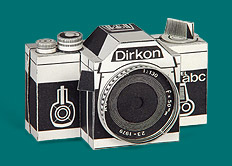
DIRKON – THE PAPER CAMERA


Cut-Out paper pinhole cameras known as the Dirkon, published in 1979 in the (Communist Czechoslovakia) magazine ABC mladých techniků a přírodovědců [An ABC of Young Technicians and Natural Scientists].

Pinhole CZ maintains a website with the instructions for making the Dirkon camera which you can download in Adobe PDF format.

Find it here: http://www.pinhole.cz/en/pinholecameras/dirkon_01.html

If you share this link please let everyone know you found it here at: freephotostuff.blogspot.com

Thanks.

Label Cloud